

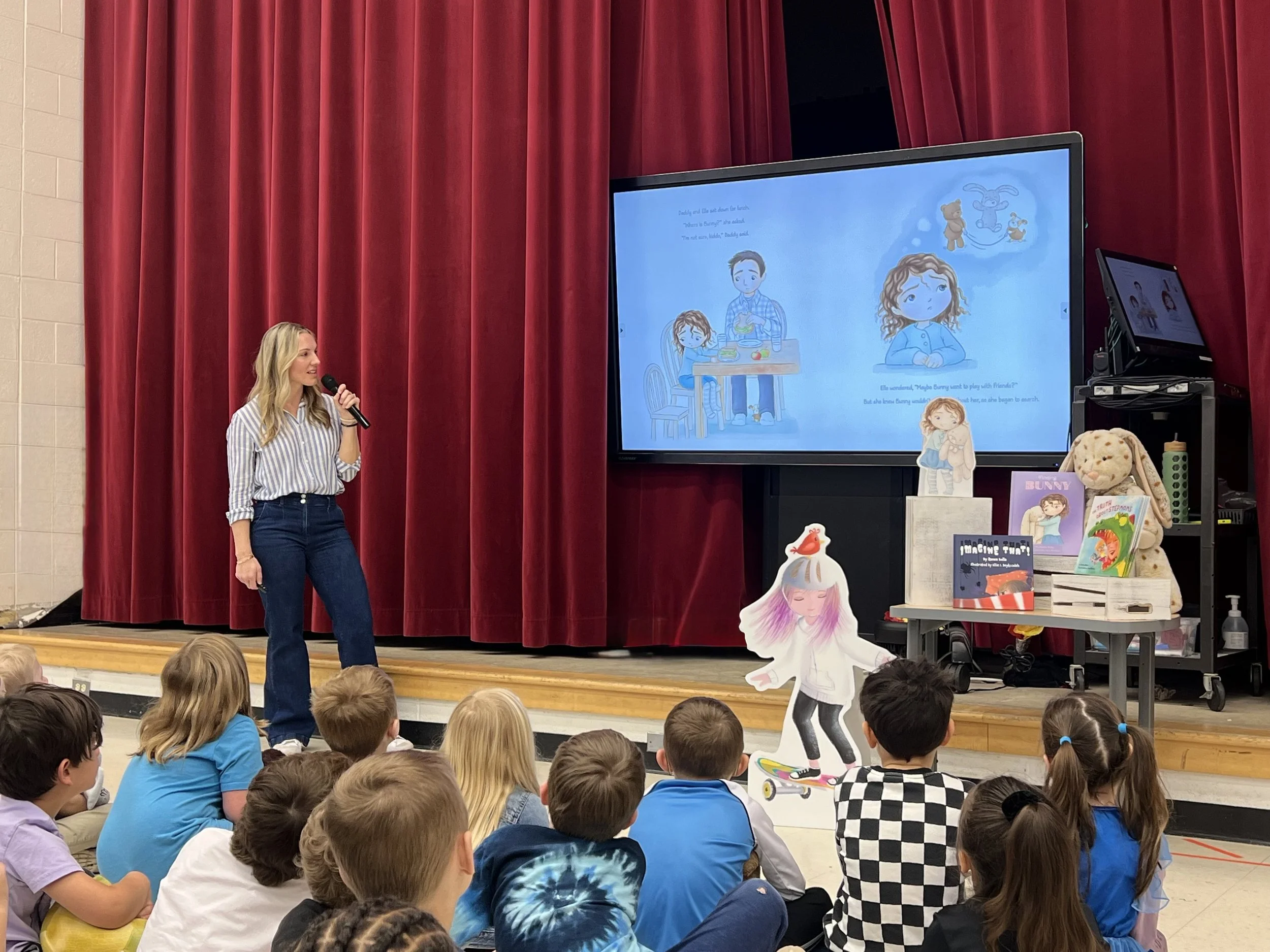
This month, I’ll connect with 3,000 students across 10 schools for March Is Reading Month. And what happens in those classrooms and media centers has very little to do with book sales.
When kids meet an author, they aren’t just inspired. They feel permission. Permission to be imaginative. To be sensitive. To be different. To write the weird ideas. To take up space creatively.
I think about the child who ran up to me after an assembly, breathless, desperate to tell me about the story they’re writing. The mom who emailed to say her daughter now insists on dressing like the main character from my book, Finding Bunny, at bedtime. The introverted student who waited until the room emptied to whisper, “You’re my new favorite author.” These are the moments that matter. Because even if only one of those 3,000 students walks away believing reading is for them or that writing is possible, the story they tell themselves about who they could become changes.
The deeper truth is this: creative careers feel abstract to kids. They aren’t always presented as viable or practical paths as students move through school. Writing stories can feel like a hobby, something you do for fun, not something you build a life around. But when an author stands in front of them, laughing, answering questions, sharing the messy middle of how books come to life, imagination becomes visible. And when children see someone turn imagination into work, they begin to believe their imagination has value too. Their stories are worth sharing.
When the Magic Becomes Human
A book is a finished product. It sits on a shelf among many others. Rarely do families close the final page and talk about what it took for that story to exist, the drafts, the rejections, the edits, the doubt.
When students meet an author, that invisible process becomes visible. They hear about the messy middle. The stories that didn’t work. The page rewritten fifty times. The “no’s” before the yes.
Suddenly, the book is no longer magic that appeared out of thin air. It’s effort. It’s revision. It’s persistence. And that changes how kids see their own work. Failure becomes part of the process instead of proof they aren’t good enough. Effort becomes normal instead of embarrassing. The distance between “someone who writes books” and “me” begins to shrink.
Expanding the Definition of Success
Kids are full of imagination. But as they grow, they begin to absorb how adults measure success, often before they even realize it. And you can hear it in the questions they ask.
“Where did you get this idea?”
“Was it hard?”
“How long did it take?”
“Are you famous?”
And almost always: “How much money do you make?”
That last one never surprises me.
Because very early on, kids are taught to connect adulthood with income and status. “What do you want to be when you grow up?” often becomes “How much will that make you?”
When they ask me how much I make, I don’t dodge the question. I tell them I make a living doing work that matters to me. I tell them I get to build stories from my imagination and share them with the world. And then I remind them: there are many ways to measure success. Many ways to measure a life.
Yes, money matters. Stability matters. We live in the real world. But so do fulfillment, contribution, creativity, and impact. Success isn’t only about how much you make. It’s about what you make.
The stories you create.
The problems you solve.
The people you encourage.
The rooms you light up by simply being yourself.
When a child hears that from an adult standing in front of them, not from a poster on the wall, not from a slogan, but from someone who chose a creative path and built a life from it, something reframes. Success becomes more expansive. Less about comparison and more about alignment.
And that shift matters. Because if we only measure success by income or status, we quietly shrink the range of futures our children can imagine for themselves. But when we widen the definition, we widen their possibilities.
What Are We Responsible for as Adults?
When schools invite authors into their buildings, they’re not just fulfilling a literacy requirement. They’re expanding the range of futures students can imagine.
When parents place books into their children’s hands and talk about the people who created them, they’re doing the same.
Exposure matters.
Proximity matters.
Children build their sense of what’s possible from what they can see. And when they see imagination treated as valuable work, when they see creativity taken seriously, when they hear an adult say there are many ways to build a meaningful life, something expands inside them.
Not all of those 3,000 students will become writers. That isn’t the goal. The goal is that they leave knowing their ideas are not small. That their imagination is not frivolous. That their definition of success does not have to be narrow.
Because widening a child’s sense of possibility is one of the most powerful forms of education we can offer.